



|
|
|
|
Poison Oak
Toxicodendron diversilobum
First posted February 1, 2004 Last updated February 14, 2004


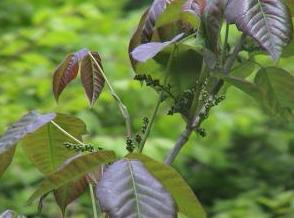
There is very little poison oak at Cazadero, but you may find some if you take a hike outside of camp or go rummaging around in the underbrush. If you can only rememer one thing about poison oak, it should be: If leaves of three, leave it be.
Poison oak is actually not an oak at all (members of the family Quercus must bear acorns), but a member of the cashew family. It (unfortunately) is one of the most widely distributed plants in California, and can be a shrub, a vine, or a free standing bush forming a thicket all by itself. Captain John Smith gave it its common name in the 1600's due its superficial resemblance to English ivy. It is deciduous, but during the summer months will have green leaves (seen above at the left) or, later in the summer, grren-red leaves (above, right) or frankly (and beautifully, if you stay out of it) red leaves.
Treatment is directed to removing the oil urushiol. Soap is unnecessary, but after being exposed, you must douse yourself immediately with water as the oil will usually bond with the skin in as little as 15 minutes and water will become less effective.
References